
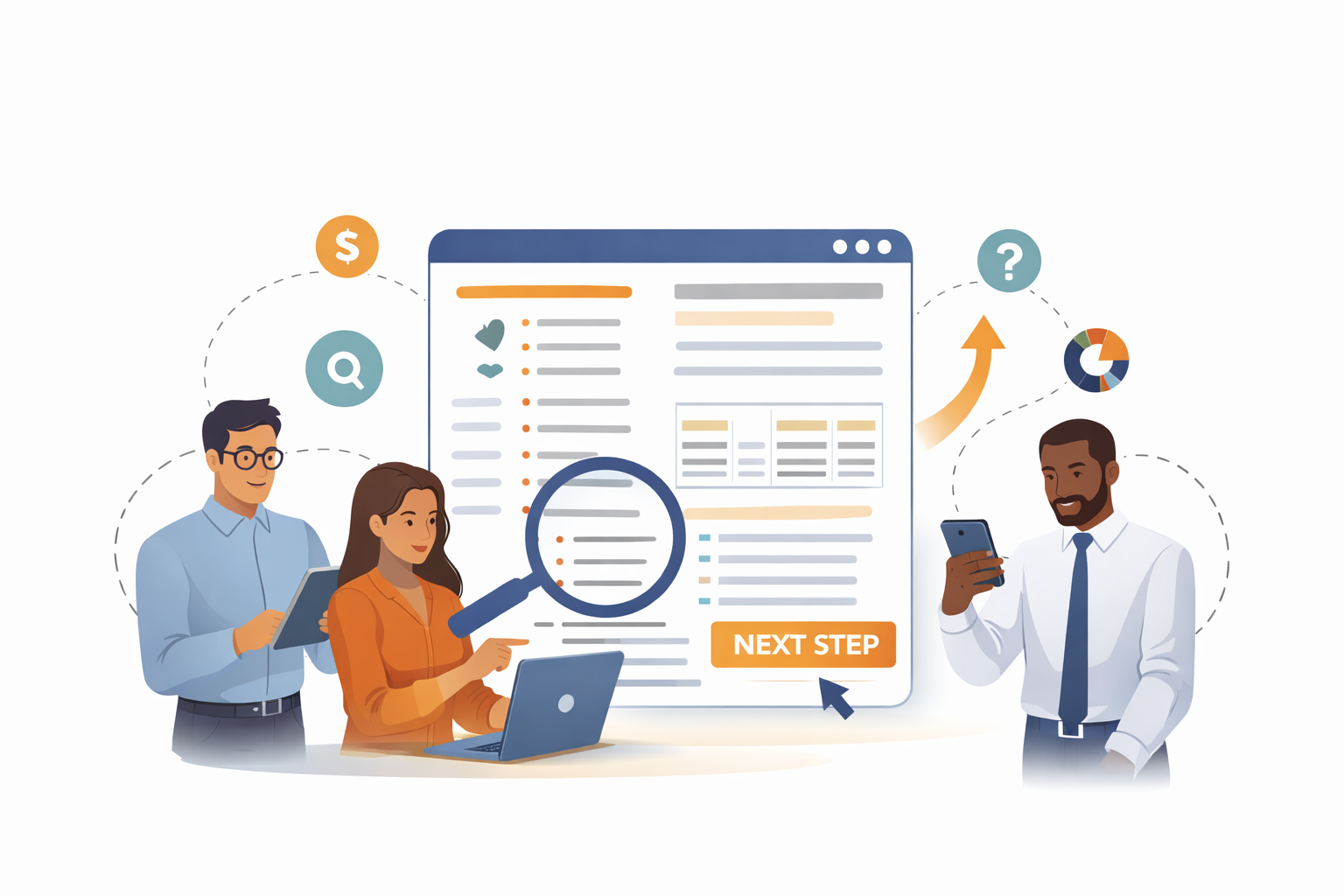

The reality of B2B content consumption today is that most buyers are not reading it word for word. Your audience is moving quickly, self-serving their research and making decisions based on how easily they can find and process what matters.
According to EMARKETER insights, B2B buyers increasingly want to review products, get pricing and answer complex questions without waiting for a sales conversation.
In other words, your website and content increasingly have to do the selling before sales ever gets involved.
Buyers value scannable B2B content because the format makes it easier to compare options across channels and look for the fastest path to an answer. McKinsey’s 2024 B2B Pulse research found that B2B decision-makers now use an average of 10 interaction channels during the buying journey, which means your content has to work harder and faster across more platforms.
Why Scannable Content Matters More Than Ever
When B2B buyers land on a page, they are looking to answer a few questions immediately, which is why scannable B2B content matters. Are these products and services relevant to my needs? Can this company solve my problem? Where do I go next?
If your message is buried in dense copy, weak structure or vague headlines, you create friction at the moment buyers are deciding whether to stay or leave.
This matters even more in an environment where discovery is increasingly shaped by AI and self-service research. Search Engine Journal points out that both users and AI systems rely on structure to understand content, including hierarchy, bullet points, tables and clear summaries.
Scannable content is easier for humans to consume and for AI-driven discovery systems to interpret and surface.
The Problem With Long-Form B2B Content
A lot of B2B content is still written as if the audience will read every word from top to bottom.
Working against scannability are:
- Long paragraphs
- Weak or generic subheads
- Key takeaways hidden in the middle of the page
- Too much explanation before any clear value appears
Many readers focus heavily on headings and subheadings first, then selectively read only the sections that seem relevant. If your structure does not signal value quickly, the substance of your content may never be seen.
In B2B, buyers are evaluating vendors and comparing information quickly. They do not need heavy content. They need scannable content that helps them to clarify decisions and act.
What B2B Scannable Content Looks Like
If you want content to perform better, write and design it for the way people actually consume information:
- Use clear, descriptive headings
- Keep paragraphs short and focused
- Raise the key point early
- Breakout details with bullets or callouts
- Make the next step obvious
Creating scannable content is about helping readers find the right information faster, especially when they are evaluating a complex purchase.
Visuals Are Part of Scannable Content, Too
Scannable content is more than just shorter copy. It is also about better communication design. With B2B content, visuals clarify complexity. A graphic can explain a workflow faster than a block of text. A short video can reduce the effort required to understand a product.
Content Marketing Institute’s 2025 B2B benchmark research found 58% of respondents rated videos the most effective content type. Visual formats are becoming central to how B2B brands communicate value and should be treated as part of the message architecture.
Scannable Content Makes Taking Action Easier
Clear, structured content improves the buying experience because it makes action easier. When B2B buyers can quickly locate answers, understand products and services, and identify next steps, the path forward feels simpler.
Scannable content removes one of the biggest barriers to progress: unnecessary effort.
Better scannability can lead to:
- More time spent on the right information
- Faster comprehension of core messages
- Smoother movement toward contact action
The Takeaway
B2B buyers scanning, comparing, looking for clarity and seeking fast answers.
The goal is to create scannable B2B content that delivers value quickly, guides attention logically and makes the next step easy. B2B companies that do this well are perceived as easier to easier to evaluate and to buy from.
Need content that actually gets read?
Schubert b2b helps brands create clear, engaging content built for how today’s buyers actually consume information. From written pieces to videos, graphics and animatics, we create content that makes complex messages easier to understand and easier to act on.
Contact Schubert b2b to create content that captures attention and drives action.
FAQs
1. Why do B2B buyers scan content instead of reading it?
B2B buyers are often researching under time pressure and comparing multiple vendors at once. Instead of reading every word, they scan for relevance, proof points and next steps. That makes structure and clarity essential in B2B content.
2. What makes B2B content more scannable?
B2B scannable content uses clear headings, short paragraphs, bullet points, highlighted takeaways and strong visuals. The goal is to help readers find important information quickly without making them work for it.
3. Does scannable B2B content mean over-simplifying complex topics?
Not at all. B2B scannable content does not remove depth. Rather, it makes deep concepts easier to access. You can still cover complex ideas, but the structure should help readers understand the main points first and explore details as needed.
4. Why are visuals important in B2B content?
Visuals such as charts, graphics, short videos and animations help communicate information faster than text alone. They can simplify complex ideas, improve retention and make key messages easier to absorb during the B2B buying process.
5. How does scannable content improve conversions?
When content is easier to scan, B2B buyers can understand value faster and move more confidently to the next step. Clear structure reduces friction, keeps users engaged and supports actions like requesting a demo, downloading a resource or contacting sales.
6. How does scannable B2B content improve engagement?
Scannable B2B content improves engagement by making information easier to read and navigate, especially for users skimming on mobile devices. Clear headings, concise paragraphs and logical formatting help readers quickly find relevant information and stay focused on key takeaways. When content is easier to consume, visitors are more likely to remain on the page and take action.