
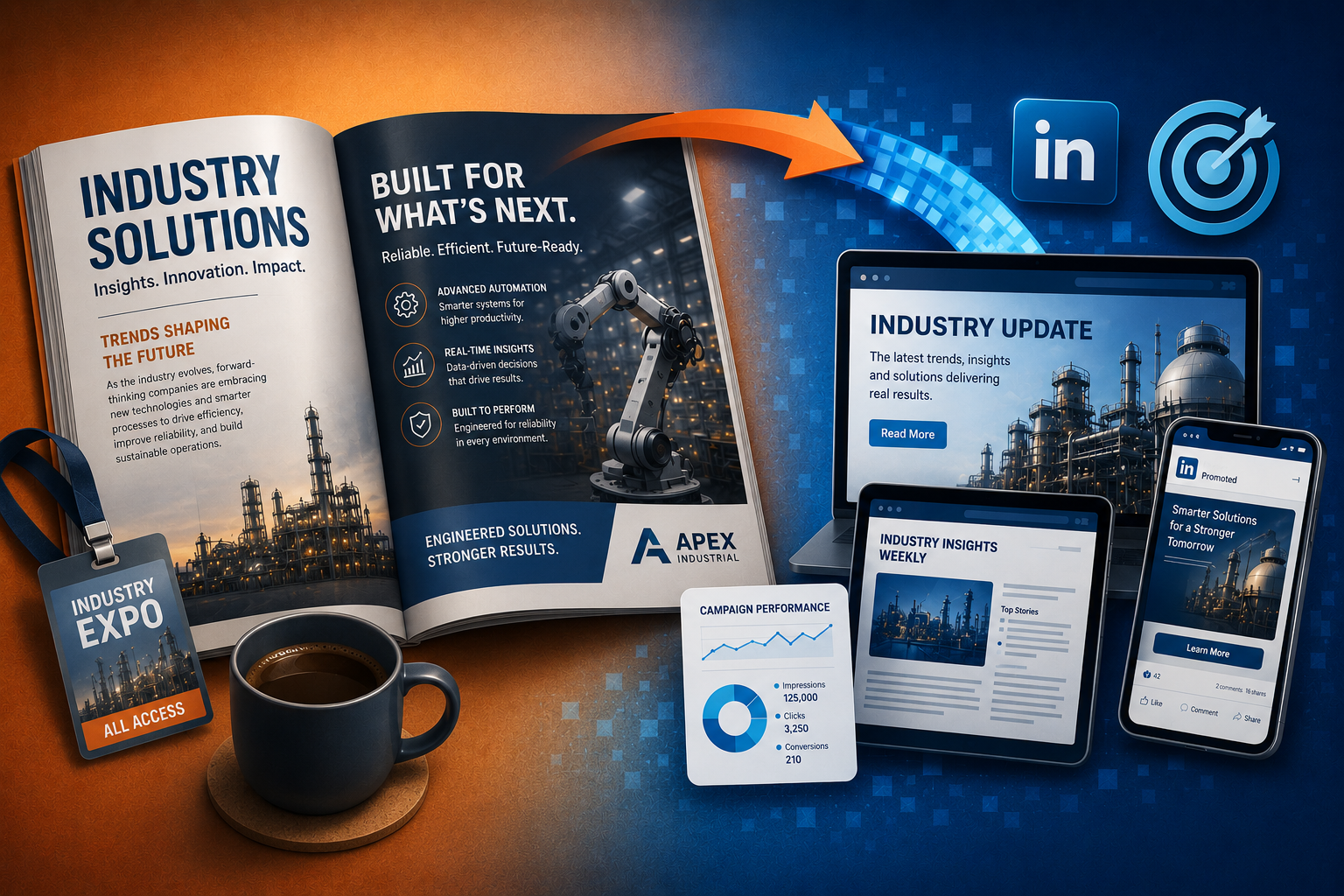

For a while, media planning in B2B became almost entirely digital, as everything moved toward paid search, social media, programmatic advertising, retargeting and marketing automation. The reasoning behind this shift is sound: You can track, optimize and scale these channels. In the process, trade publication advertising started getting left out of the conversation.
However, abandoning trade publication advertising is problematic because modern media planning isn’t about choosing digital or traditional. It’s about building a strategy that actually reaches decision-makers at the right time, in the right context with the right level of credibility.
In complex B2B buying environments, decisions rarely happen because of one ad, one click or one campaign. They happen across a longer journey involving multiple people, multiple touchpoints and multiple sources of influence. In fact, the average B2B buying decision involves 13 people and that 89% of purchases involve two or more departments.
Trade publication advertising gives your brand a way to show up in trusted industry environments where buyers, influencers, engineers, executives, operators and procurement teams are already paying attention.
Media Planning Isn’t Just About Channels — It’s About Context
A lot of media planning today focuses heavily on performance metrics like:
- Cost per click
- Impressions
- Conversion rates
- Cost per lead
- Click-through rate
- Retargeting audience size
Sure, those metrics matter, but they don’t tell the full story in B2B.
Where your message appears changes how that message is perceived. For example, when your brand shows up in a LinkedIn feed, you’re competing with personal updates, job announcements, thought leadership posts, memes, videos and competitor content.
But when your brand shows up in a respected industry publication, you’re appearing in a more focused, trusted environment. Trade publications are often where professionals go to understand industry trends, product innovations, regulatory updates, technical insights and market shifts.
The strongest B2B media plans aren’t built around one channel. They are built around how different channels reinforce each other.
Trade Publication Advertising Reaches High-Intent Audiences
One of the biggest advantages of trade publication advertising is audience quality. You’re targeting a specific group of professionals who:
- Work in the industry
- Stay informed on trends
- Care about technical and business developments
- Influence purchasing decisions
- Research vendors, products, and solutions
- Share insights with internal teams
They are actively choosing to engage with industry-specific content.
B2B buyers often conduct significant research before they ever contact a sales team. Gartner research has found that 61% of B2B buyers prefer a rep-free buying experience, indicating that a lot of independent research now happens before direct sales engagement.
Trade publications support the research process because they reach buyers before they are ready to request a quote, schedule a demo or talk to sales.
The Role of Trade Publications in a Modern Media Plan
When used strategically, trade publication advertising can become a strong top- and mid-funnel driver. If you are targeting a niche technical audience, a publication that already serves that audience can help you reach decision-makers more efficiently than broad digital campaigns.
A smart approach looks like this:
- Use trade publications to build awareness and credibility
- Align placements with relevant editorial topics
- Support print placements with digital display or newsletter sponsorships
- Drive readers to a dedicated landing page
- Retarget engaged audiences with more direct messaging
- Use the campaign to support demand generation or account-based marketing
- Equip sales teams with the same message prospects are seeing in-market
Trade publication advertising becomes part of a connected system with your demand generation strategy, your account-based marketing efforts, your event calendar, your content strategy, and your sales enablement plan.
Timing and Placement Are Everything
Predictability is one of the biggest advantages of trade publications that digital media does not always offer.
Editorial calendars give marketers insight into:
- Upcoming topics
- Industry trends
- Product focuses
- Seasonal themes
- Event coverage
- Special issues
- Buyer-relevant planning windows
This predictability makes your media planning proactive instead of reactive.
Advertising in a featured section focused on your products’ applications helps place your brand alongside content your buyers are already seeking out. Instead of appearing as a generic ad, your message shows up in a relevant editorial environment that’s tied directly to the challenges, trends or solutions your audience wants to understand.
Creative Has to Work Harder in Print
Print does not give you multiple chances. There is no nurture sequence. No animated carousel. No second subject line. No automated follow-up. You get one moment of attention, so your creative has to work hard.
Strong trade publication advertising creative should:
- Be visually clear and easy to scan
- Communicate value quickly
- Use a direct headline
- Avoid overloading with technical language
- Focus on one primary message
- Include a strong call to action
- Make the next step obvious
A print ad is not a brochure. It needs to create interest quickly. The goal is to make the reader want to learn more.
Trade Publication Advertising Strengthens Digital Campaigns
As part of an integrated media plan, trade publication advertising can make your digital campaigns stronger. When prospects have already seen your brand in a respected industry publication, your digital ads may feel more familiar. Your email campaigns may feel less cold. Your sales outreach may feel more credible.
This kind of connected planning is especially important because B2B buyers move across many touchpoints before making a decision. McKinsey’s B2B Pulse research found that B2B customers use an average of 10 interaction channels in their buying journey. And trade publications are one of those touchpoints.
Final Thought: Better Media Planning Starts With Better Integration
Modern media planning is not about chasing every channel. It is about choosing the right mix of channels based on your audience, message, market, timing and goals.
Trade publication advertising should be part of that conversation because it helps B2B brands show up in trusted environments, reach high-intent audiences, build credibility, and support longer buying journeys.
When paired with smart digital execution, strong creative, clear measurement and an integrated demand generation strategy, trade publication advertising can play a powerful role in moving buyers from awareness to consideration.
Ready to build a smarter, more integrated media plan? Connect with Schubert b2b to create a strategy that reaches the right decision-makers in the right places.
B2B Media Planning FAQs
1. What is media planning in B2B marketing?
Media planning in B2B marketing is the process of choosing the right mix of channels, placements, timing and messaging to reach business decision-makers. A strong media plan considers where buyers spend time, what information they trust and how each channel supports the larger marketing strategy.
2. Why does trade publication advertising still matter?
Trade publication advertising still matters because it places your brand in a trusted industry environment. While digital channels are useful for tracking and optimization, trade publications help build credibility, reach niche audiences and support longer B2B buying journeys.
3. How does trade publication advertising support digital marketing?
Trade publication advertising strengthens digital campaigns by building familiarity before prospects see your digital ads, emails or sales outreach. When buyers have already encountered your brand in a respected industry publication, later digital touchpoints can feel more credible and relevant.
4. Is trade publication advertising only useful for brand awareness?
No. While trade publication advertising is valuable for brand awareness, it can also support mid-funnel marketing goals. When paired with landing pages, newsletter sponsorships, retargeting and account-based marketing, it can help move prospects from awareness to consideration.
5. What makes trade publications valuable for B2B audiences?
Trade publications attract professionals who are actively looking for industry news, trends, technical insights and product information. That makes the audience more focused and relevant than many broad advertising channels.
6. How should trade publication advertising fit into a media plan?
Trade publication advertising should be integrated with your broader media planning strategy. It can support demand generation, account-based marketing, event promotion, content campaigns and sales enablement when planned alongside other channels.
7. Why is context important in media planning?
Context affects how your message is perceived. An ad in a busy social feed may compete with many distractions, while an ad in a respected trade publication appears alongside industry-specific content your audience already values.
8. How do editorial calendars help with media planning?
Editorial calendars help marketers plan ahead by showing upcoming publication themes, special issues, event coverage and seasonal topics. This allows brands to align advertising with subjects their target buyers are already interested in.
9. What makes a strong trade publication ad?
A strong trade publication ad is clear, focused and easy to scan. It should communicate value quickly, use a direct headline, avoid unnecessary technical complexity and include a clear call to action.
10. How do you measure trade publication advertising?
Trade publication advertising can be measured through landing page visits, QR code scans, direct traffic, branded search activity, digital campaign engagement, lead quality, sales feedback and visibility among target accounts. It should be evaluated as part of the full buyer journey, not only by last-click conversions.
Trade publication advertising is most effective when it works alongside your broader marketing efforts. All marketing tactics should be viewed as part of a larger strategy rather than as standalone initiatives. By strategically integrating trade media, digital marketing, content, events, and sales enablement, companies can improve performance, strengthen engagement, and achieve better business results. At Schubert b2b, we help organizations build integrated B2B marketing strategies that connect every touchpoint and drive measurable growth. Ready to build a more integrated media plan? Contact Schubert b2b to explore strategies that align trade publications, digital marketing, and demand generation efforts.